
Jakarta Post-IKN — Between Capital Status and Global Megapolitan Challenges

Jakarta faces a new chapter after the relocation of the State Capital to Nusantara. This article deeply reviews the political, legal, economic, and social dynamics accompanying Jakarta's transition from the national capital to a global economic and business center, as well as the challenges and opportunities faced by this megapolitan city.
The debate surrounding Jakarta's status and future has become one of the hottest topics in the national and local political landscape. With the acceleration of the development of the Nusantara Capital City (IKN) in East Kalimantan, the big question of when Jakarta will officially relinquish its status as the nation's capital and how it will transform in the future continues to circulate among the public and stakeholders. This is not merely an administrative issue, but a complex nexus involving legal, economic, social, and, of course, political aspects.
The relocation of the capital is a mega-project that has been planned for decades and is now entering a crucial phase. Jakarta, which has long been the center of everything, must now prepare for a new chapter. This transition sparks various speculations and in-depth analyses regarding the city's development direction, governance structure, and its impact on the lives of millions of its citizens.
Jakarta Post-IKN: A Transition Full of Questions
Law Number 3 of 2022 concerning the State Capital City clearly mandates the relocation of the center of government from Jakarta to IKN Nusantara. Nevertheless, this transition process is not instantaneous and leaves many details to be resolved. One of the key points is Jakarta's legal status after IKN officially operates at full capacity.
In the initial phase, Jakarta will still share roles with IKN, especially in certain functions that have not been fully transferred. However, over time, Jakarta's role as the center of government will drastically decrease, paving the way for its new identity. This is a fundamental change that will reshape the face of this metropolitan city.
Legal and Administrative Status
With the enactment of the IKN Law, the government is preparing the Draft Law on the Special Region of Jakarta (RUU DKJ). This draft law will serve as the legal umbrella for Jakarta's new status. Based on the circulating draft, Jakarta will be designated as the Special Region of Jakarta (Daerah Khusus Jakarta) oriented towards becoming a global center for economy, business, and finance, replacing its status as the Special Capital Region.
This change is not merely a name change. Its implications are far-reaching, from the regional governance structure, special authorities granted, to the mechanism for electing regional heads. The discourse regarding the appointment of a governor instead of direct elections had emerged, although it was later dismissed by the government, which affirmed that regional elections would still be held. This indicates how sensitive issues related to regional autonomy and the political participation of Jakarta's citizens are.
| IKN Transition Phase | Description | Jakarta's Status | Remarks |
|---|---|---|---|
| Initial Phase (2022-2024) | Development of IKN's basic infrastructure, relocation of a small number of civil servants. | Still the Capital City. | Main government functions remain in Jakarta. |
| Crucial Phase (2024-2029) | Gradual relocation of ministries/agencies, Independence Day celebrations in IKN. | Transition, shared roles. | RUU DKJ is expected to be completed and effective. |
| Full Phase (2029 onwards) | IKN fully functions as the center of government. | No longer the Capital City. | Jakarta focuses on being a global economic center. |
Economic and Social Impacts
The relocation of the capital will undoubtedly cause significant economic and social waves in Jakarta. Some parties fear a decline in economic activity, especially in sectors highly dependent on the presence of the center of government. However, other perspectives see this as a golden opportunity for Jakarta to redefine itself.
Jakarta can focus on its core potential as a center for finance, trade, and creative industries. Foreign and domestic investment can be directed to strengthen these sectors, create new jobs, and enhance global competitiveness. However, the challenge lies in ensuring that this transition does not create deeper social disparities or sacrifice the informal sector.
Local Political Dynamics of the Capital
The change in Jakarta's status will automatically heat up the local political arena. The upcoming Jakarta Regional Head Election (Pilkada), most likely in November 2024, will be a fierce contest. Candidates must be able to offer a clear vision of how they will lead Jakarta in the post-capital era, with all its challenges and opportunities.
This Pilkada is not just about who will lead, but also about what model of leadership is most suitable for a transforming Jakarta. Will Jakarta be led by a figure focused on infrastructure and economic development, or one that prioritizes social and environmental issues?
Contest for Regional Head Seat
Several national and local political figures have begun to be mentioned as potential candidates for Governor of DKI Jakarta. Political parties have also started exploring coalitions and campaign strategies. Issues such as flood management, traffic congestion, air pollution, and the development of sustainable public transportation will be the main topics of candidate debates.
The role of the DKI Jakarta Regional People's Representative Council (DPRD) will also become increasingly crucial in overseeing this transition. They will be the governor's main partner in formulating adaptive and responsive regional policies to Jakarta's changing status. The balance of power between the executive and legislative branches will significantly determine the city's development direction.
Sustainable Development Challenges
Although no longer the capital, Jakarta will not lose its status as Indonesia's largest megapolitan city. With a continuously growing population and complex urban problems, the challenge of sustainable development remains a top priority. This includes:
- Environmental Management: Waste management, air quality, and the availability of green open spaces.
- Infrastructure and Transportation: Development of an integrated and sustainable mass transportation system to overcome traffic congestion.
- Clean Water Availability: Ensuring sufficient and quality access to clean water for all residents.
- Disaster Mitigation: Preparedness for tidal floods and land subsidence that still threaten Jakarta's coast.
Solutions to these problems require strong political commitment, innovation, and active participation from all elements of society. Jakarta cannot rely solely on its past status but must dare to innovate for its future.
Voices of Citizens and Stakeholders
The change in Jakarta's status has naturally evoked various reactions among citizens and stakeholders. Some see it as a new optimism for a more organized city focused on economic development, while others worry about its negative impact on the community's identity and welfare.
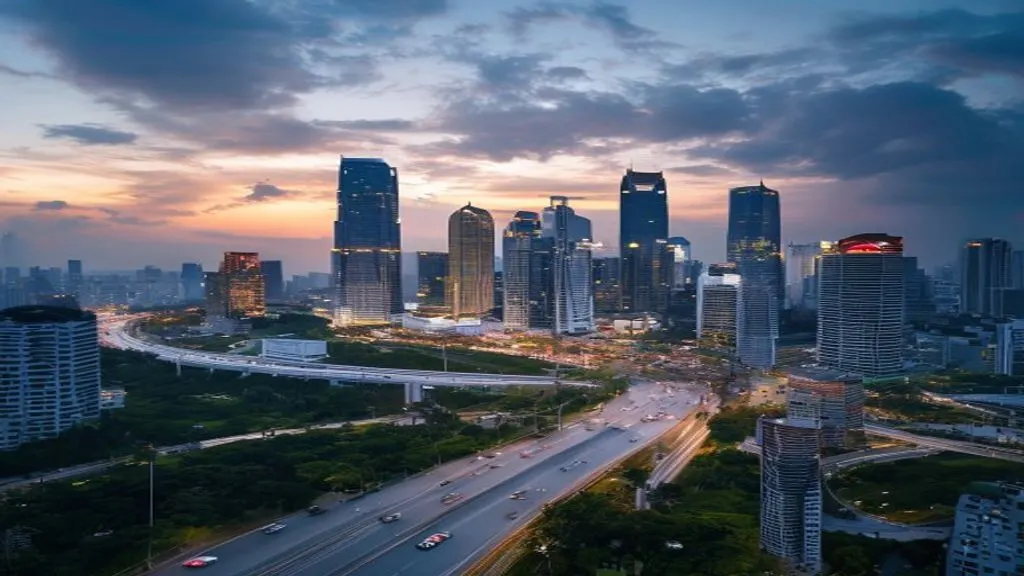
Businesspeople and investors see great opportunities in Jakarta's vision as a global financial center. They hope for more flexible regulations and investment incentives to attract more capital, creating a dynamic business ecosystem. However, they also await regulatory clarity and legal certainty to support this vision.
Public Hopes and Concerns
For most Jakarta residents, the main question is how this change will affect their daily lives. Will there be improvements in public services? Will the cost of living increase or decrease? Will there be more job opportunities?
Concerns about a potential new wave of urbanization after the capital's relocation are also frequently raised. Although the center of government is moving, Jakarta's economic appeal is expected to remain high. This could mean continued pressure on the city's infrastructure and resources if not anticipated with sound policies.
Role of Central and Regional Governments
The central government, through the Ministry of Home Affairs and other relevant ministries, plays a vital role in ensuring a smooth transition. Effective coordination between the central government and the DKI Jakarta Provincial Government is key. This includes drafting regulations, allocating budgets, and adjusting institutional frameworks.
The DKI Jakarta Provincial Government, on the other hand, must be proactive in developing comprehensive long-term strategic plans. These plans must encompass not only economic aspects but also social, cultural, and environmental dimensions, with active participation from the community and academics. A clear and focused vision will be the compass for Jakarta in this new era.
Future Projections for Jakarta
Jakarta's future as a global city is not just a dream but a necessity if it is to remain relevant on the international stage. With its long experience as a capital and economic center, Jakarta has a strong foundation to achieve this vision. However, a fundamental transformation involving all sectors is required.
Jakarta must become a city that is not only physically large but also smart, sustainable, and inclusive. The development of technology, innovation, and quality human resources will be the main pillars in realizing this vision. This is a long journey, but with meticulous planning and consistent execution, Jakarta can rediscover its glory.
Jakarta's Vision as a Global Hub
Jakarta's vision as a global economic and business hub demands the city to compete with other world megacities like Singapore, Kuala Lumpur, or even Dubai. This means enhancing competitiveness in terms of digital infrastructure, ease of investment, quality of education, and a conducive living environment.
The regional government needs to attract investment in strategic sectors such as financial technology, the creative economy, and MICE (Meeting, Incentive, Convention, and Exhibition) tourism. Improving international connectivity, both by air and sea, is also essential to strengthen Jakarta's position on the world map.
Political Threats and Opportunities
Politically, this transition presents both threats and opportunities. The main threat is the potential for local political instability if crucial issues are not managed well, or if vested interests hinder the transformation process. Populism could emerge and exploit this uncertainty.
However, there are also significant opportunities. The change in status can be a momentum for political leaders to demonstrate their capacity in managing major changes. This is an opportunity to build consensus, formulate progressive policies, and set Jakarta on a path of more sustainable and equitable development. Politicians who can embrace this vision and implement it effectively will be remembered as architects of Jakarta's future.
In conclusion, Jakarta's journey towards its new identity after the capital's relocation is a complex narrative filled with challenges and hopes. It requires visionary leadership, active community participation, and solid coordination between various levels of government. Jakarta's future will not only shape the destiny of its millions of citizens but will also be a reflection of Indonesia's ability to manage major changes for the nation's progress.
This transformation is not the end of everything for Jakarta, but rather the beginning of a promising new chapter, where the city can evolve into a more resilient and innovative global megapolitan center, free from the political burden of being the nation's capital. However, to achieve this, all parties must work together, set aside sectional interests, and focus on a shared vision for a better Jakarta.
Key Points
- Jakarta will transform from the State Capital City to the Special Region of Jakarta (DKJ), focusing on becoming a global center for economy, business, and finance.
- The Draft Law on the Special Region of Jakarta (RUU DKJ) is being discussed to regulate the city's new legal and administrative status, including the retention of the regional election mechanism.
- This transition brings significant impacts on Jakarta's economy and society, with the potential to strengthen the finance and creative industries, but also challenges of urbanization and inequality.
- Local political dynamics, especially the 2024 Pilkada, will be crucial in determining Jakarta's leadership direction in the new era.
- Sustainable development challenges such as floods, traffic congestion, and pollution remain top priorities requiring political commitment and innovation.
Frequently Asked Questions
When will Jakarta officially cease to be the Capital of Indonesia?
Based on Law Number 3 of 2022 concerning the State Capital City, IKN Nusantara will gradually take over the capital's functions. Jakarta will officially no longer hold the status of the nation's capital after the President issues a Presidential Decree on the capital's relocation, which is expected to occur after all primary infrastructure and facilities in IKN are ready and the relocation process of ministries/agencies is significantly underway.
What is Jakarta's new status after the Capital moves to IKN?
After no longer being the State Capital City, Jakarta will have the status of the Special Region of Jakarta (DKJ). The RUU DKJ is currently under discussion and is expected to designate Jakarta as a global center for economy, business, and finance, with special authorities to support this role.
What is the impact of the Capital's relocation on Jakarta's economy?
The relocation of the capital is not expected to immediately decrease Jakarta's economy, but rather to transform its focus. Jakarta will be oriented towards the development of the finance, trade, services, and creative industries sectors. The challenge is to manage this transition to avoid a significant decline in economic activity and to ensure that new opportunities are optimally utilized.
Will there be regional elections in Jakarta after the status change?
Yes, regional elections (Pilkada) for the Governor and Vice Governor of DKI Jakarta will still be held. Although there was a discourse of appointing a governor in the initial draft of the RUU DKJ, the government has affirmed that the Pilkada mechanism will be maintained to guarantee the political participation of citizens.
What are the main challenges facing Jakarta after the Capital's relocation?
The main challenges facing Jakarta after the capital's relocation include: 1) Adjustment of regulations and governance structure according to the DKJ status. 2) Management of urbanization and continued high population growth. 3) Enhancing global economic competitiveness. 4) Addressing environmental issues such as floods, traffic congestion, and air pollution. 5) Ensuring inclusive and equitable development for all segments of society.